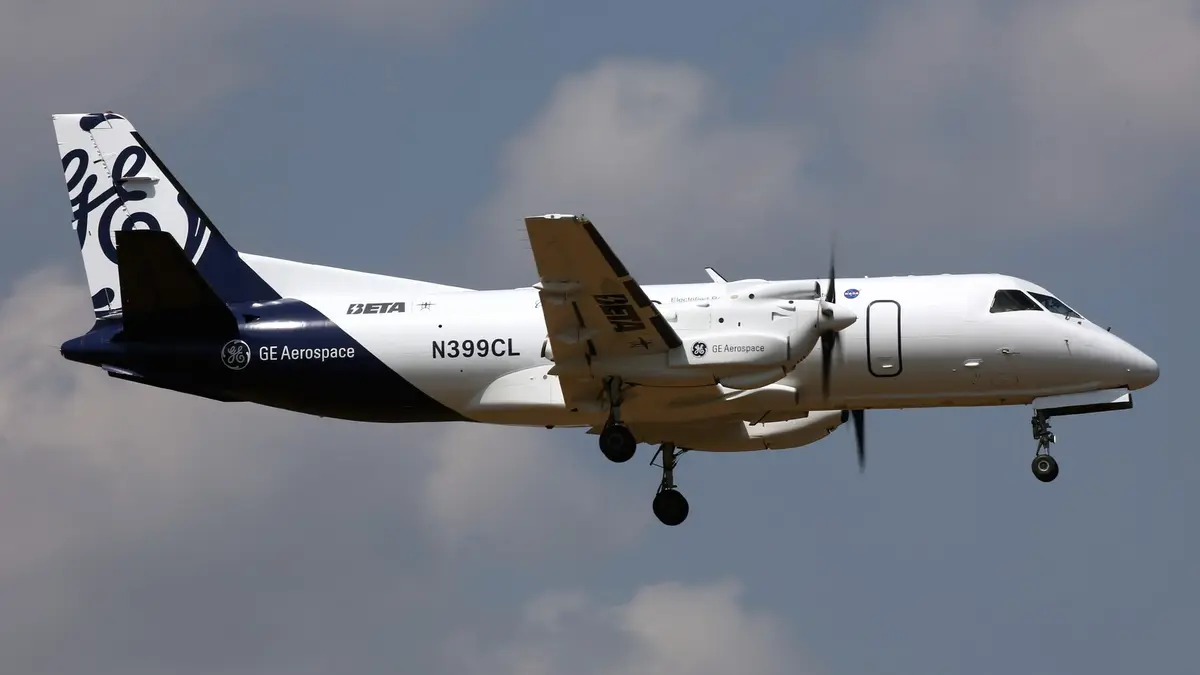
A modified Saab 340B became the first hybrid-electric aircraft to fly above 30,000 feet, or 9.1 kilometres, NASA said.
GE Aerospace, NASA, BETA Technologies and Boeing conducted the tests. According to GE Aerospace, the longest flight in hybrid-electric operation lasted more than two hours, after which BETA pilots ferried the aircraft across the North Atlantic to the United Kingdom.
An inverted nacelle containing the megawatt-class system was installed on the right side of the Saab 340B. It integrates a CT7 engine, electric motor-generators, power converters, inverters, batteries and other equipment used to manage propulsion.
During testing, the electric powertrain helped drive the propeller while also generating power for the battery. Engineers tested the system at altitudes used by commercial passenger aircraft.
“This achievement reflects what NASA does best in aeronautics: we explore bold possibilities, validate them through rigorous research and testing, and work with industry to turn breakthrough ideas into technologies that bring real value for the American people,” said Laurie Grindle, director of the Aeronautics Division within NASA’s Research and Technology Mission Directorate.
The technology was developed over more than a decade. In 2022, the integrated propulsion system was tested at a NASA facility under conditions simulating altitudes of up to 45,000 feet before the programme moved to ground and flight tests.
The Saab 340B remains a flight demonstrator rather than a production passenger aircraft. The partners expect the work to inform future hybrid systems designed to cut fuel use and operating costs without sacrificing performance. The aircraft also appeared in the flying display at the Farnborough International Airshow.